The Elphysic Precedent: How One Tribunal Case Triggered the 2026 Liability Shift
In the history of UK supply chain compliance, few moments are as pivotal as the Upper Tribunal ruling in Elphysic Limited & Ors v HMRC.
This legal battle is the architectural blueprint for the April 2026 Liability Shift. The arguments used by HMRC to win this case are the same mechanisms they will use to transfer tax debt to your agency in the upcoming financial year.
If you want to understand the future of your liability, you must understand Elphysic.
A £600,000 Loophole
The case involved a network of small companies (including Elphysic Ltd) that were ostensibly independent. However, HMRC argued that they were, in reality, a single economic entity artificially sliced into pieces.
The scheme relied on the VAT Flat Rate Scheme (FRS).
- The Rule: Small businesses with low turnover can keep a percentage of the VAT they collect as profit.
- The Scheme: Instead of one large recruitment firm paying standard VAT, the labour supply was split into dozens of micro-companies.
- The Result: Each micro-company claimed the FRS profit, collectively draining the Exchequer of massive sums.
The Tribunal ruled in favour of HMRC. The key phrase used was "Contrived Disaggregation." The court found that these companies had no commercial justification for existing separately; their only purpose was to abuse the tax system.
Why This Matters for 2026
The government learned a hard lesson from Elphysic: chasing thousands of "ghost" companies is expensive and slow.
By the time HMRC wins a tribunal against a Mini-Umbrella Company (MUC), the assets are gone, and the directors have vanished overseas. The "Whac-A-Mole" strategy failed.
Enter the 2026 Legislation. Instead of chasing the fraudsters, the Treasury is changing the game. Under the new rules, the liability for unpaid PAYE and NI will transfer up the supply chain to the "Deemed Employer" (the Recruitment Agency).
HMRC no longer needs to prove that you committed fraud. They simply need to prove that the supply chain was fraudulent (using the Elphysic precedent of disaggregation) and that you failed to prevent it.
How Diligens Would Have Prevented This
The tragedy of the Elphysic case is that the fraud was visible in the data long before it reached the courtroom.
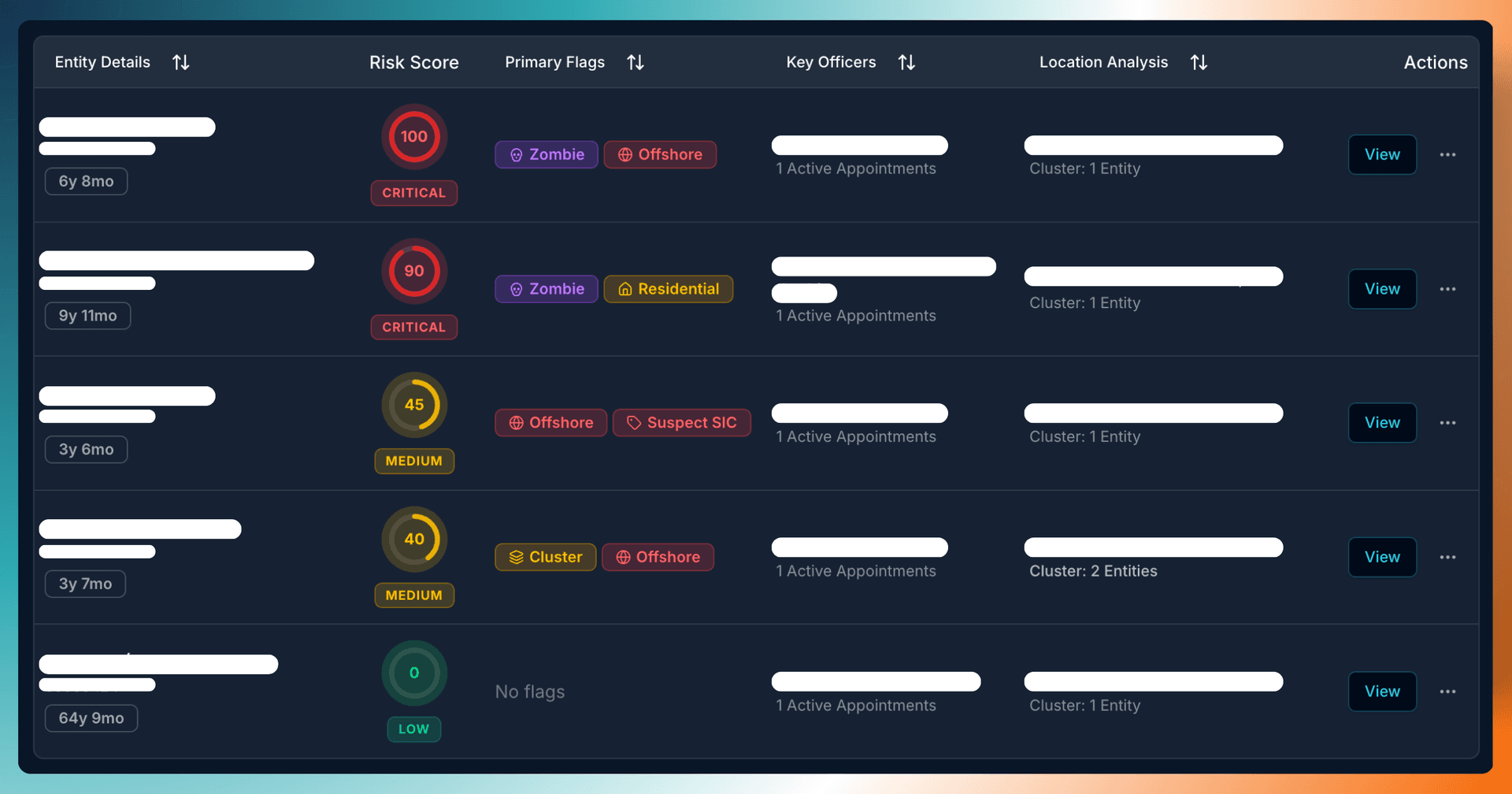
If the agencies involved had been running Diligens Guardian, three distinct alarms would have triggered immediately:
The "Shared Brain" Heuristic
In the Elphysic network, multiple companies shared the same administrative DNA.
- Diligens Check: We look for "cluster" signals—shared correspondence addresses, identical incorporation dates, and common directorships.
- The Result: We would have flagged these companies as a High Risk Cluster on Day 1, not Year 3.
The Director Pattern
The companies involved often utilised directors with no digital footprint or commercial history relevant to recruitment.
- Diligens Check: Our "Director Flip" algorithm monitors the residency and tenure of officers. A sudden influx of disconnected directors into a supply chain is a statistical anomaly we flag instantly.
The Classification Trap
The companies claimed to be independent consultancies, yet they were acting as high-volume labour suppliers.
- Diligens Check: We cross-reference the Standard Industrial Classification (SIC) code against the known nature of your supply chain.
- The Result: If a supplier is registered as a "Management Consultancy" (70229) but is sitting on your PSL as an Umbrella Company, our logic engine flags this as a "SIC Mismatch." A legitimate labour supplier should rarely operate under a consultancy code.
The Lesson for CFOs
The Elphysic ruling proves that the courts can and will "pierce the corporate veil." You can no longer rely on the legal fiction that every limited company on your PSL is an island.
In the eyes of the law, a network of fraud is a single entity. And come April 2026, you will be the one holding the bill for it.
Prepare for the Liability Shift
The law is changing. Your compliance process must change with it. Analyse your agency's risk.
Understand your risk profile